

Halinisa Islamic Period Tracker App
Mobile application
Partnership
Educated Brothers
Role
Product Strategist, Creative Director and Fiqh Researcher
Scope
Strategic Planning, Brand and Identity Design, Fiqh Methodology and Research, Product Design (UI/UX), Marketing and Communications
Halinisa is not just a tracking app; it's a comprehensive decision-support project that grounds Muslim women's biological cycles in a fiqh (Islamic jurisprudence) foundation.
The project was shaped by the fiqh research and brand strategy I personally conducted, while the Educated Brothers team brought this vision to life technically, taking on the software and web development processes.
The application was designed to enter the market with an MVP (Minimum Viable Product) that includes the most critical fiqh-based calculations (the distinction between hayız and istihaze) to build a trustworthy foundation. The free, ad-supported model is preserved, with value-added features such as partner tracking and advanced analytics planned to be added in subsequent versions in phases. This approach is a strategic product management process that transforms technology into a fiqh service by combining complex religious rulings with a clean user experience and character design.
While mainstream period tracking apps focus solely on biological cycle prediction and health data, Halinisa processes this data with Hanafi school methodology to clarify the user's daily worship obligations (such as prayer and fasting).
For Muslim women, distinguishing between menstruation (hayız) and irregular bleeding (istihaze) is critical to the validity of religious practice. However, adapting the complex calculations found in classical works (variables like bleeding duration, interruption cases, and previous cycle patterns) to daily life causes serious confusion, especially in irregular cycles.
Halinisa responds to this need by simplifying these complex fiqh algorithms through a digital interface, positioning itself not as a fatwa authority but as a tracking and decision-support tool that helps put fiqh into practice.

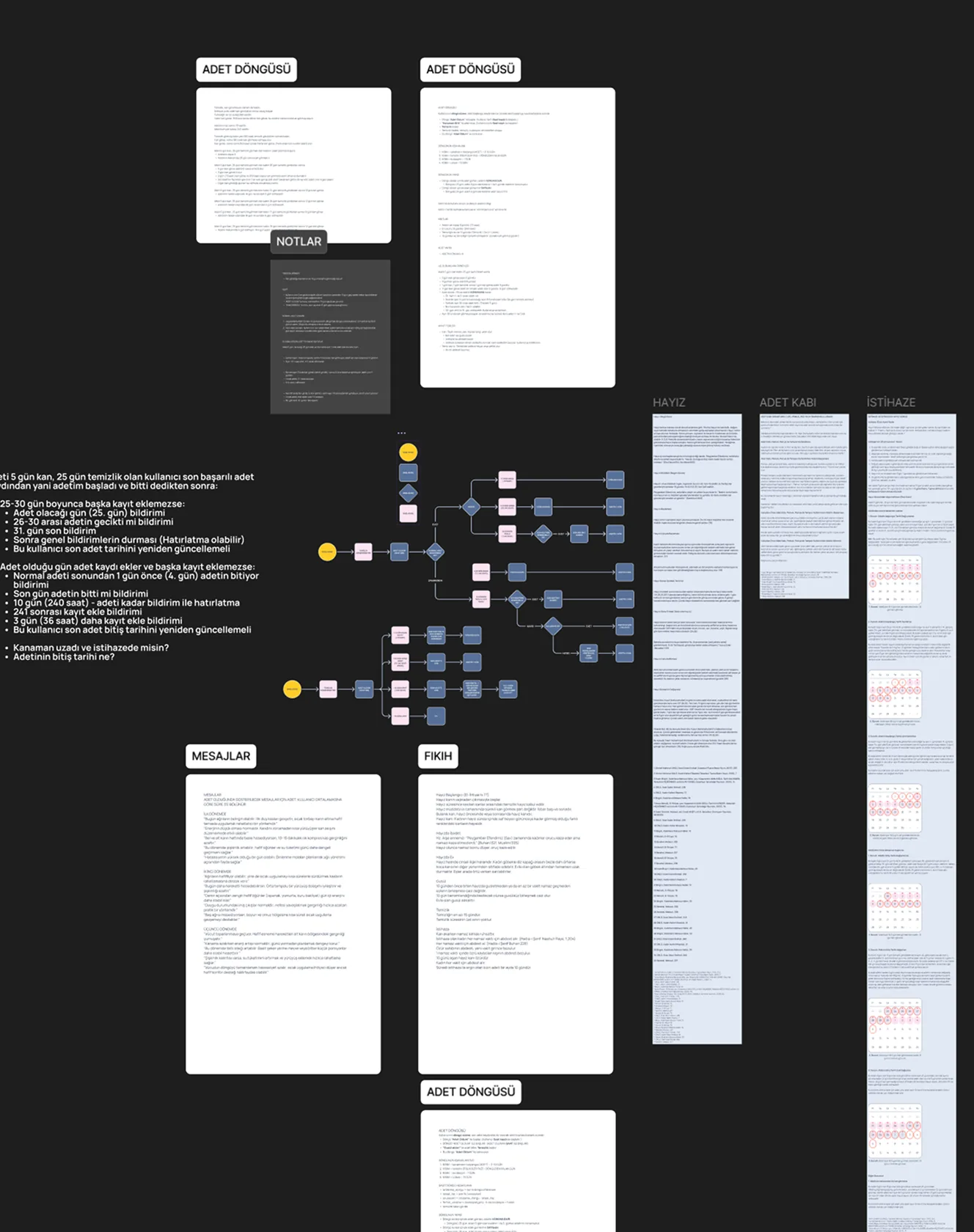
Halinisa's strategy was built to create a trustworthy and sustainable user experience by combining fiqh depth with technological simplicity.
The project's long-term vision is to become a "holistic Islamic assistant" that includes features such as pregnancy tracking, postnatal (nifas) tracking, fasting and a comprehensive worship planner. However, to establish technical accuracy and user trust, the following MVP (Minimum Viable Product) boundaries were set:
To ensure the fiqh validity of the algorithm, instead of random interpretations, three core pillars of Hanafi fiqh were taken as references:
Halinisa's design process aimed to blend the weight of classical fiqh knowledge with the user-friendly dynamics of a modern mobile application. At this stage, a balance was struck between the seriousness of fiqh topics and a warm digital experience that doesn't fatigue the user.
Color Choice: The app balances the vibrant navy that represents trust and authority with pink tones that reflect compassion and empathy. This contrast presents both the firmness of fiqh rulings (navy) and a sensitive approach to women's health (pink).
Modern Touches: To add depth and dynamism to the interface, gradients (color transitions) were preferred. This reinforces the app being perceived as a modern technological solution rather than a traditional pile of text.
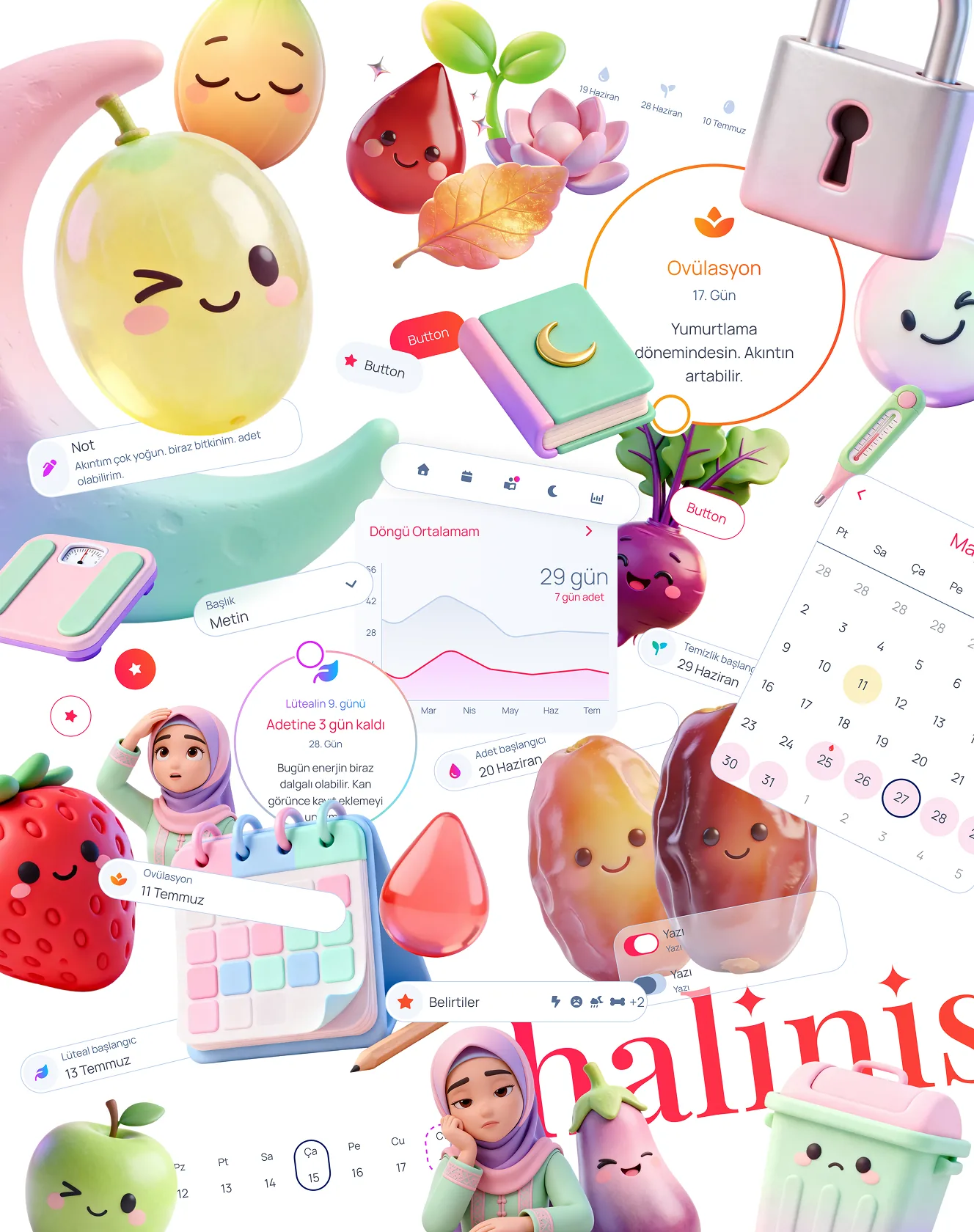
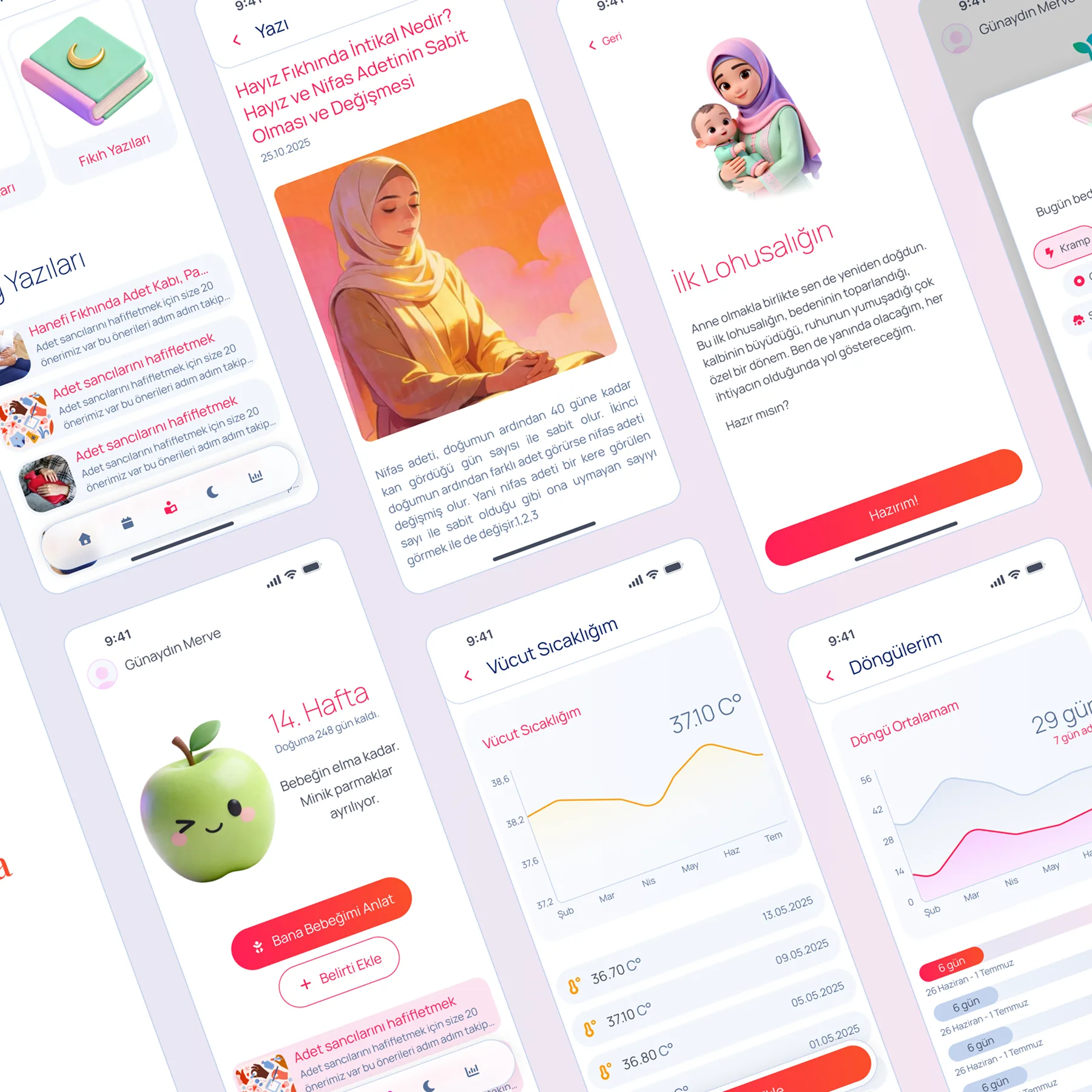
Visual Elements: 3D cartoon-style illustrations and character designs were used to build a connection with users. This design choice aims to reduce the user's "fear of making a mistake" by making complex fiqh processes more sympathetic and accessible.
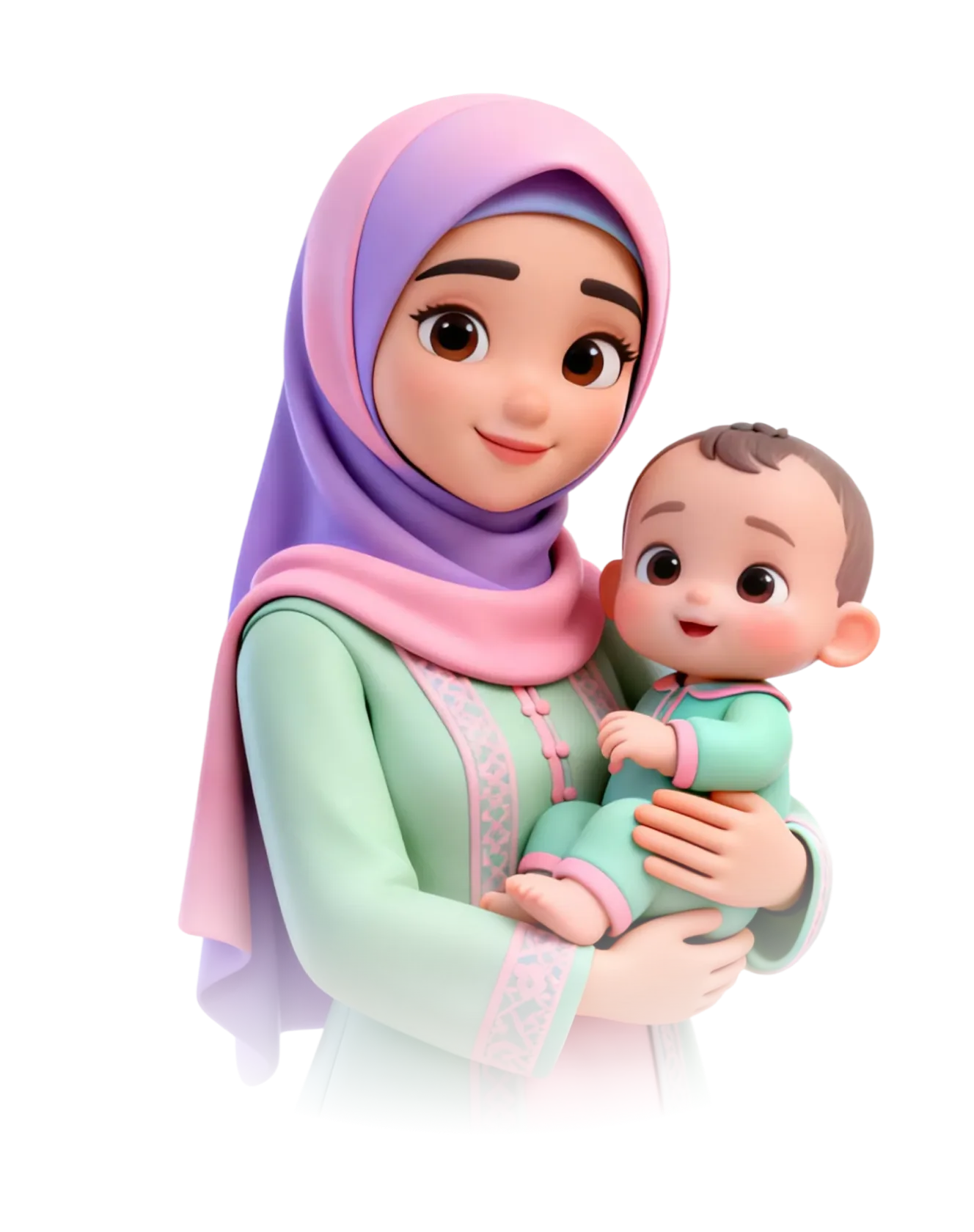
"Sister's Voice": The app's text and guidance language was crafted as a "sister's voice" — one that preserves seriousness but isn't distant. This approach parallels the "teaching, explaining, and simplifying" style found in Imam al-Mawsili's works.
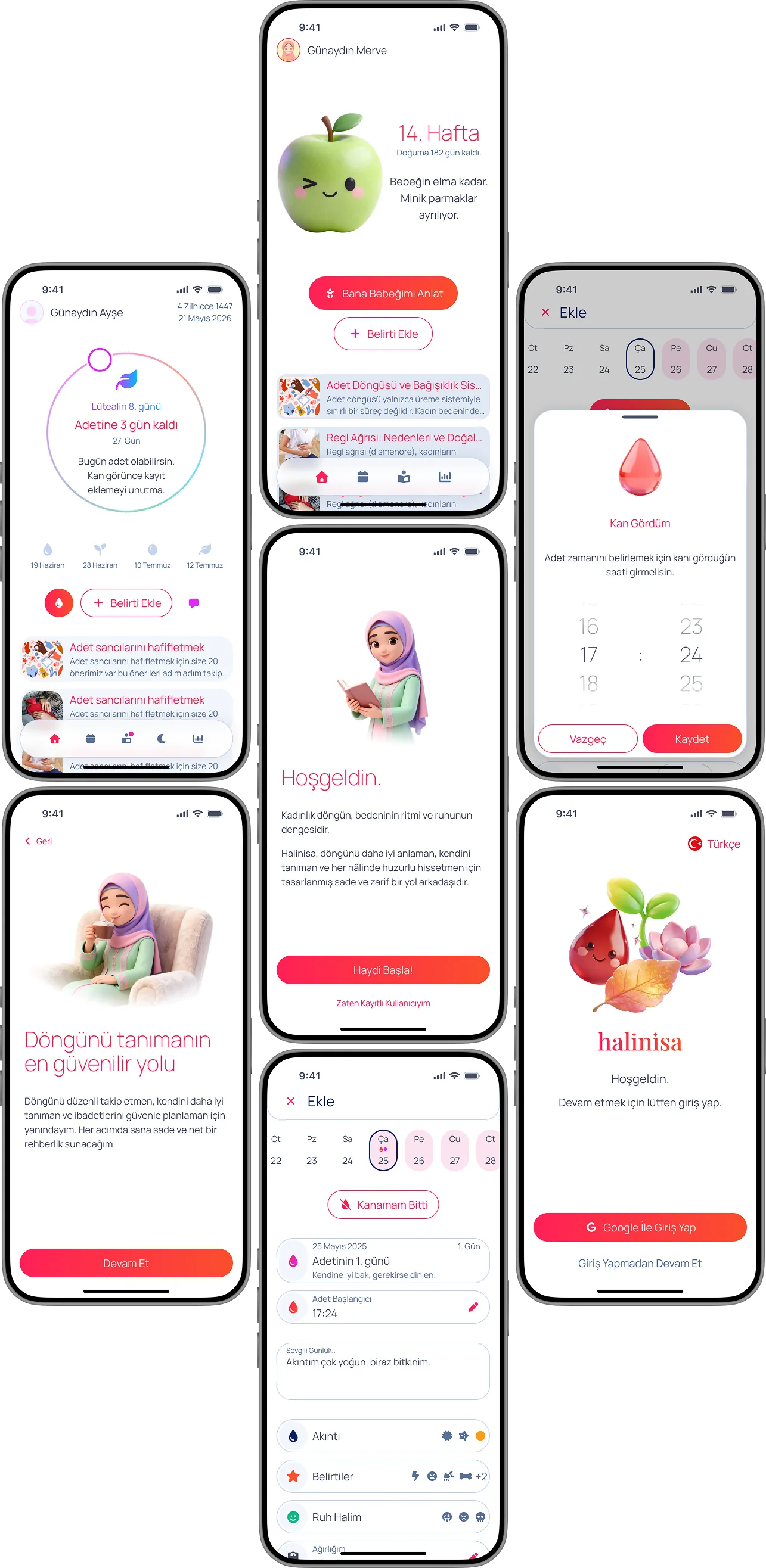
Simple and Clear: A clear narrative free of technical terms was adopted so that users can find answers within seconds to questions like "Can I pray?" or "Can I fast?" — even amid the most complex irregularities.
Status-Focused Dashboard: On the main screen, the user's current fiqh status (hayız, purity, or istihaze) and its effect on their worship is designed to be the most prominent element.
Quick Entry and Easy Reporting: Functional modules that allow users to quickly enter symptoms (spotting, pain, fever, etc.) and feed data to the fiqh calculation engine were integrated into the interface.
Content Library: Information from fiqh sources is presented in a modern blog format so users can consume it easily.
This design strategy elevates Halinisa beyond a mere data-entry tool into a modern, aesthetic digital assistant where users confidently manage their worship life.
AaBbCcDdEeFfGgHhIiJjKkLlMmNnOoPpQqRr
SsTtUuVvWwXxYyZz
0123456789
AaBb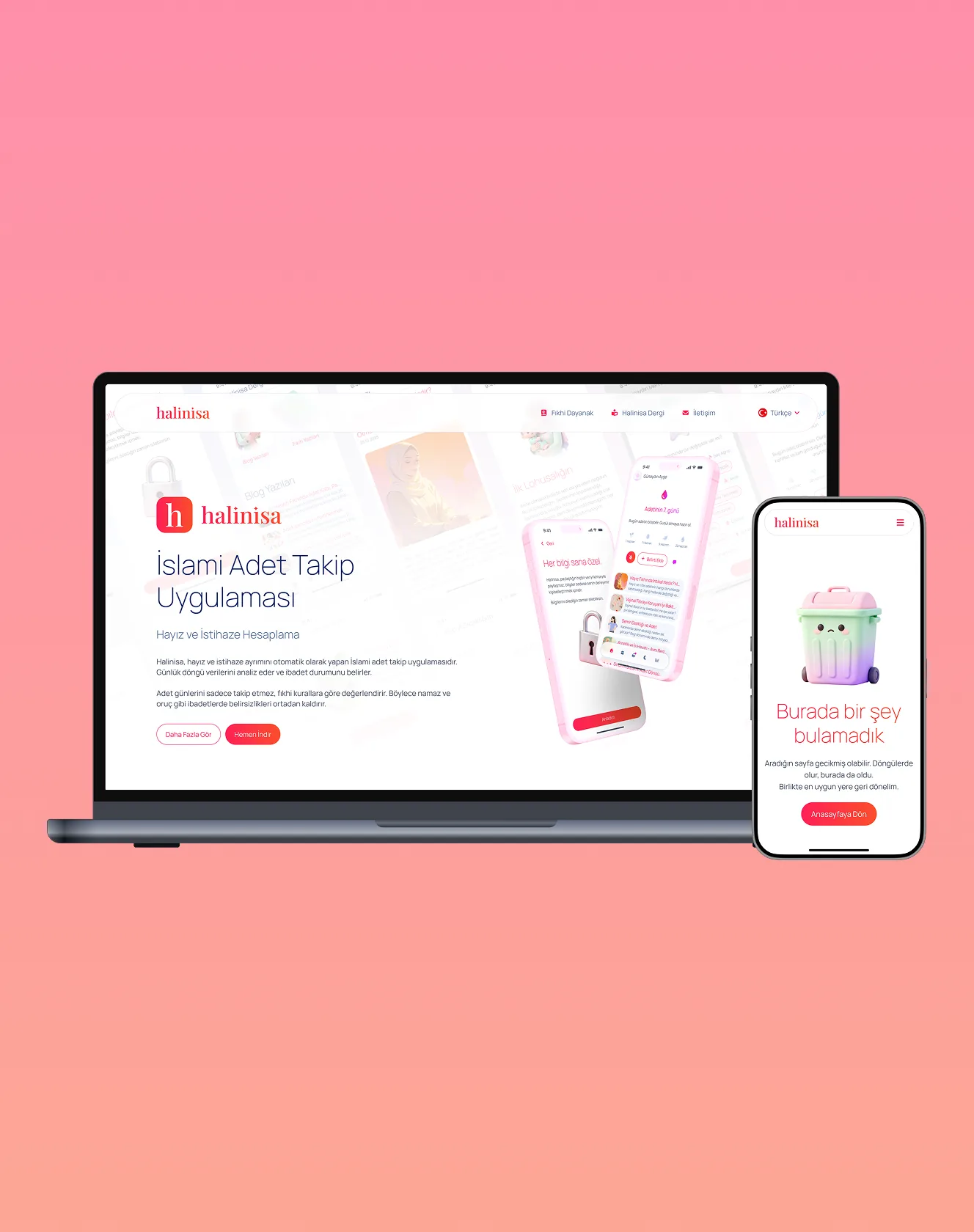
Once the design process was completed and the project moved into software development, focus shifted to marketing and content strategies that would increase the project's digital visibility and user reach.
Social Media Identity and Visual Standards: Social media post templates aligned with the brand's visual style established in the design phase were created. These templates are structured to deliver complex fiqh information (hayız, nifas, istihaze) and women's health content to the user in the simplest, clearest way.
SEO and Blog Format: A custom blog format was prepared for the website and the in-app content area. Women's health and fiqh articles were made SEO-friendly based on the Hanafi school (sourced from Imam al-Mawsili, Imam Birgivi, and Imam al-Sarakhsi). This way, users can reach accurate fiqh information and the app directly via search engines.
Competitor Analysis and Identifying Gaps: For an aggressive marketing strategy, existing period tracker apps were analyzed in detail. It was found that competing apps only predict the biological cycle but lack functions critical to Muslim women, such as the hayız/istihaze distinction and daily worship status calculation. These gaps were defined as Halinisa's core competitive advantage (USP) in the market.
Growth and Aggressive Marketing Preparation: A strategic infrastructure was prepared for the aggressive social marketing campaigns planned to reach broader audiences based on user feedback expected after the MVP launch. In this process, the app's image as "a trustworthy assistant faithful to the Ahl al-Sunnah wa'l-Jama'ah line" was placed at the center of the communication.

Halinisa has succeeded in filling one of the largest technical gaps in Muslim women's worship life by combining traditional fiqh knowledge with modern technology. The project's current point and future projection are structured as follows:
Ultimate Value: Halinisa is not merely a period tracking app — it is a bridge that carries the legacy of giants like Imam al-Mawsili, Imam Birgivi, and Imam al-Sarakhsi into the digital age.
The strategy and design I crafted, combined with Educated Brothers' technical strength, built a trustworthy, technological safe harbor that protects the modern Muslim woman's fiqh sensitivities. This case analysis is proof of how an idea can be transformed into a sustainable product through fiqh depth, user-focused design, and strategic versioning.